🍕 Homemade Pizza in a Pan 🧀
A Delicious, Easy, and Oven-Free Pizza Recipe
1. Introduction
Homemade pizza in a pan is a simple and delicious recipe that allows you to enjoy freshly made pizza without needing an oven. It is prepared using basic ingredients such as flour, yeast, cheese, tomato sauce, and your favorite toppings. The pizza is cooked on the stovetop in a covered pan, making it an excellent choice for people who want to prepare a tasty homemade meal with minimal equipment. With its soft crust, melted cheese, and flavorful toppings, this pizza is perfect for lunch, dinner, or a quick snack.
2. Origin
Pizza originated in Italy, particularly in Naples, where flatbreads topped with tomatoes, cheese, and other ingredients became popular among local people. Traditional pizza was originally baked in very hot ovens. Over time, different cooking methods were developed to make pizza more accessible at home. Pan pizza became a popular alternative because it can be prepared using a regular stovetop and a frying pan. Today, homemade pan pizza is enjoyed worldwide because it is convenient, affordable, and easy to customize.
3. Cultural Significance
Pizza is one of the most popular foods around the world and is often associated with family gatherings, celebrations, and sharing meals with friends. Making pizza at home allows families to spend time together while preparing their favorite toppings. Pan pizza is especially useful for people who do not have an oven or prefer a simple cooking method. It also encourages creativity because everyone can choose different ingredients according to their tastes and cultural food preferences.
4. Ingredients and Quantities
Preparation time: 20 minutes
Resting time: 1 hour
Cooking time: 15–20 minutes
Total time: Approximately 1 hour and 40 minutes
Servings: 2–3 people
For the Dough
• 2 cups all-purpose flour (approximately 250 g)
• 1 teaspoon dry yeast (approximately 3–4 g)
• ¾ cup warm water (approximately 180 ml, added gradually)
• 1 tablespoon olive oil
• ½ teaspoon sugar
• ½ teaspoon salt
For the Pizza Topping
• ½ cup tomato sauce (approximately 120 g)
• 1 cup shredded mozzarella cheese (approximately 100–120 g)
• 1 small onion, thinly sliced (optional)
• 1 small bell pepper, chopped
• ½ cup sliced mushrooms (optional)
• 1 small tomato, sliced (optional)
• 1 teaspoon dried oregano
• ½ teaspoon black pepper
• 1 tablespoon olive oil
5. Optional Additions
You can customize your homemade pan pizza by adding ingredients that suit your preferences.
• Extra cheese: Add cheddar, mozzarella, or parmesan for a richer flavor.
• Vegetables: Use olives, spinach, sweet corn, onions, mushrooms, or bell peppers.
• Protein: Add cooked chicken, tuna, or beef.
• Herbs and spices: Try basil, oregano, garlic powder, or chili flakes.
• Different sauces: Replace regular tomato sauce with garlic sauce or pesto.
• Spicy flavor: Add fresh chili or a little hot sauce.
• Fresh garnish: Sprinkle chopped parsley or fresh basil over the pizza before serving.
Make sure meat and poultry are fully cooked before adding them to the pizza, as the short stovetop cooking time may not be sufficient to cook raw toppings safely.
6. Tips for Success
1. Use warm water: The water should be warm, not hot, to help activate the yeast without damaging it.
2. Allow the dough to rise: Cover the dough and leave it in a warm place for about 45–60 minutes, or until it has approximately doubled in size.
3. Avoid adding too much flour: Excess flour can make the crust hard and dry.
4. Preheat the pan: Warm the pan over low heat before placing the dough inside.
5. Keep the heat low: Low heat helps the bottom cook without burning while allowing the top to heat through.
6. Cover the pan: A lid traps heat and helps melt the cheese and cook the toppings.
7. Use a thick-bottomed pan: This distributes heat more evenly and reduces the risk of burning.
8. Do not overload the pizza: Too many toppings can make the dough soggy and prevent it from cooking properly.
9. Choose suitable cheese: Mozzarella melts well and gives the pizza its classic cheesy texture.
10. Check the bottom regularly: Lift the edge carefully to ensure the crust is golden brown rather than burnt.
7. Instructions
Step 1: Prepare the Dough
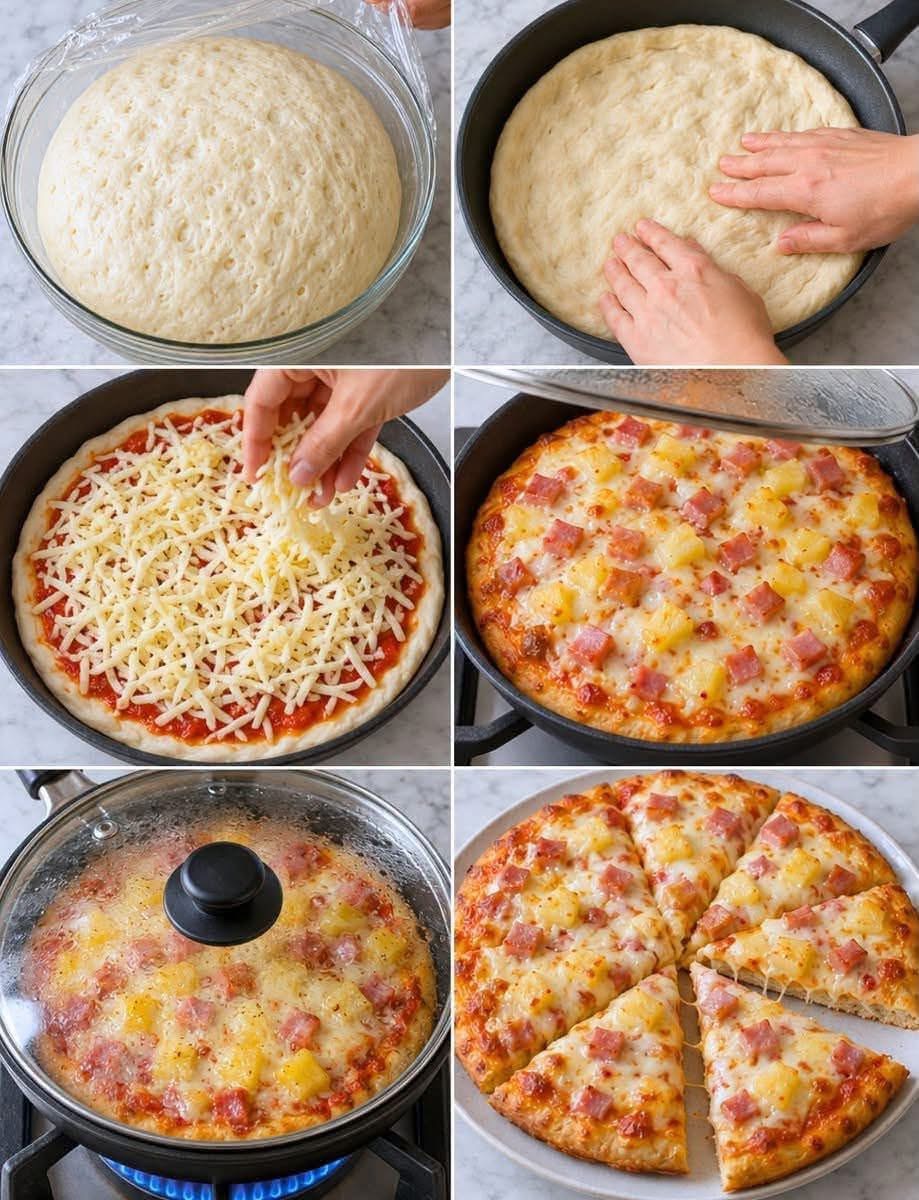
In a large bowl, combine the flour, dry yeast, sugar, and salt. Gradually add the warm water and olive oil. Mix until a soft dough forms.
Step 2: Knead the Dough
Transfer the dough to a clean surface and knead it for approximately 8–10 minutes until it becomes smooth and elastic. If the dough is too sticky, add a small amount of flour, but avoid adding too much.
Step 3: Let the Dough Rise
Place the dough in a lightly oiled bowl and cover it with a clean kitchen towel. Leave it in a warm place for 45–60 minutes, or until it has doubled in size.
Step 4: Shape the Pizza
Gently press the dough to release excess air. Roll or stretch it into a circle that fits your frying pan. The dough should not be too thick, as this may prevent the center from cooking properly.
Step 5: Prepare the Pan
Lightly grease a nonstick frying pan with olive oil. Place the shaped dough into the pan and adjust it to fit the bottom.
Step 6: Cook the Base
Cook the dough over low heat for approximately 4–5 minutes, until the bottom begins to firm up and turn lightly golden.
Step 7: Add the Toppings
Flip the dough carefully if needed. Spread the tomato sauce evenly over the surface, leaving a small border around the edges. Sprinkle the mozzarella cheese on top, followed by your chosen vegetables, cooked meat, oregano, and black pepper.
Step 8: Cook the Pizza
Cover the pan with a lid and cook over low heat for approximately 10–15 minutes. Check occasionally to prevent the bottom from burning. The pizza is ready when the crust is cooked through, the cheese has melted, and the toppings are hot.
Step 9: Serve and Enjoy
Remove the pizza from the pan and allow it to rest for 2–3 minutes. Slice it into wedges and serve while warm.
Important: Cooking time varies depending on the thickness of the dough and the type of pan. If the bottom browns before the center is cooked, reduce the heat further. Ensure the dough is fully cooked before serving.
8. Description
Homemade pizza in a pan is a delicious dish featuring a soft, freshly prepared crust topped with tangy tomato sauce, melted cheese, and colorful ingredients. The bottom becomes lightly crisp while the inside remains soft and tender. The combination of savory toppings, aromatic herbs, and creamy cheese creates a satisfying flavor in every bite. Since it requires no oven, this recipe is practical for students, beginners, busy families, and anyone who wants to enjoy homemade pizza with simple kitchen equipment.
9. Nutritional Information
The nutritional values depend on the size of the pizza, the amount of cheese, the toppings, and the quantity of oil used.
Estimated nutrition per serving, assuming the recipe serves 3 people:
• Calories: 350–450 kcal
• Carbohydrates: 45–55 g
• Protein: 12–18 g
• Fat: 10–18 g
• Fiber: 2–4 g
• Sugar: 3–6 g
• Sodium: 500–800 mg
These figures are approximate estimates rather than laboratory-tested values. The actual nutritional content may vary considerably depending on the ingredients and portion size.
To make the pizza more nutritious, consider using whole-wheat flour, adding extra vegetables, choosing reduced-fat cheese, and limiting the amount of salt and oil.
10. Conclusion
Homemade pizza in a pan is an easy, affordable, and flavorful alternative to traditional oven-baked pizza. With simple ingredients and a few straightforward steps, anyone can prepare a satisfying meal at home. Its versatility allows you to experiment with different sauces, cheeses, vegetables, and proteins to create a pizza that matches your personal preferences. Most importantly, the recipe demonstrates that delicious homemade food does not require expensive equipment or complicated techniques.
11. Recommendation
This recipe is highly recommended for beginners, students, families, and anyone who wants to prepare a quick and delicious meal without an oven. For the best results, use fresh ingredients, allow the dough enough time to rise, and cook the pizza slowly over low heat.
Serve your pan pizza with a fresh green salad, homemade yogurt sauce, or a light vegetable soup for a more balanced meal. You can also prepare individual mini pizzas so that everyone can choose their own toppings.
12. Embracing Healthful Indulgence
Enjoying pizza can be part of a balanced and healthy lifestyle. Rather than eliminating your favorite foods, focus on preparing them with fresh ingredients and sensible portions.
Here are a few simple ways to make your homemade pan pizza healthier:
• Choose whole-grain flour: Replace some or all of the white flour with whole-wheat flour to increase fiber intake.
• Add more vegetables: Include mushrooms, spinach, tomatoes, onions, and bell peppers for additional vitamins, minerals, and fiber.
• Balance the cheese: Use enough cheese to enjoy its flavor without adding excessive amounts.
• Select lean proteins: Add cooked chicken, tuna, or beans for extra protein.
• Control the oil and salt: Measure these ingredients instead of adding them freely.
• Watch your portions: Enjoy a reasonable serving alongside vegetables or a fresh salad.
• Make your own sauce: Prepare tomato sauce at home to control the amount of salt, sugar, and oil.
The key is balance, not restriction. Homemade pan pizza can be both delicious and nourishing when prepared with wholesome ingredients and enjoyed as part of a varied diet.
Final Recommendation 🍕
Homemade pizza in a pan is an excellent recipe for anyone seeking a simple, oven-free cooking experience without sacrificing flavor. Its soft crust, melted cheese, and customizable toppings make it suitable for everyday meals and special occasions alike. With a few healthy adjustments and the right cooking technique, you can enjoy a homemade pizza that is satisfying, versatile, and delicious.