Introduction
Homemade yeast-based doughs form the cornerstone of comfort baking, transforming simple pantry staples like flour, yeast, water, and fat into versatile culinary canvases. Whether shaped into pillowy dinner rolls, stretched into a bubbling artisanal pizza crust, or cut into golden-fried donuts, working with yeast dough connects bakers to centuries-old culinary traditions of fermentation and communal eating.
Description
Yeast-raised doughs rely on microscopic single-cell fungi (Saccharomyces cerevisiae) to consume sugars and produce carbon dioxide gas and ethanol, which create the characteristic airy texture and complex flavor profiles. The dinner roll dough yields an enriched, tender crumb thanks to the addition of eggs, milk, and sugar. The pizza dough utilizes a higher hydration and hot-oven bake to achieve a blistered, crisp exterior with a chewy interior. The donut dough incorporates a high butter and egg content, producing a rich, cake-like yet airy texture that fries into a golden, tender pastry.
Origin
Yeast fermentation traces its earliest roots back to ancient Egypt around 4000 BCE, where bakers accidentally discovered that unbaked dough left exposed to wild yeasts would rise, creating lighter, more palatable bread than flatbreads. Pizza evolved from ancient flatbread traditions in Naples, Italy, during the 18th and 19th centuries, eventually incorporating tomatoes and mozzarella. Fried dough pastries, the evolutionary ancestors of modern donuts, date back to ancient Roman delicacies and medieval Dutch olykoeks (oil cakes) brought to North America by early settlers.
Cultural Significance
Across global culinary traditions, baked and fried doughs hold symbolic weight as foods of hospitality, celebration, and comfort. Warm dinner rolls anchor family holiday tables and Sunday suppers, symbolizing warmth and shared sustenance. Pizza functions as a universal social food, designed specifically for communal sharing. Donuts represent a staple of sweet indulgence and casual neighborhood gatherings, embedded deeply in modern cafe culture and morning routines.
Ingredients Quantity
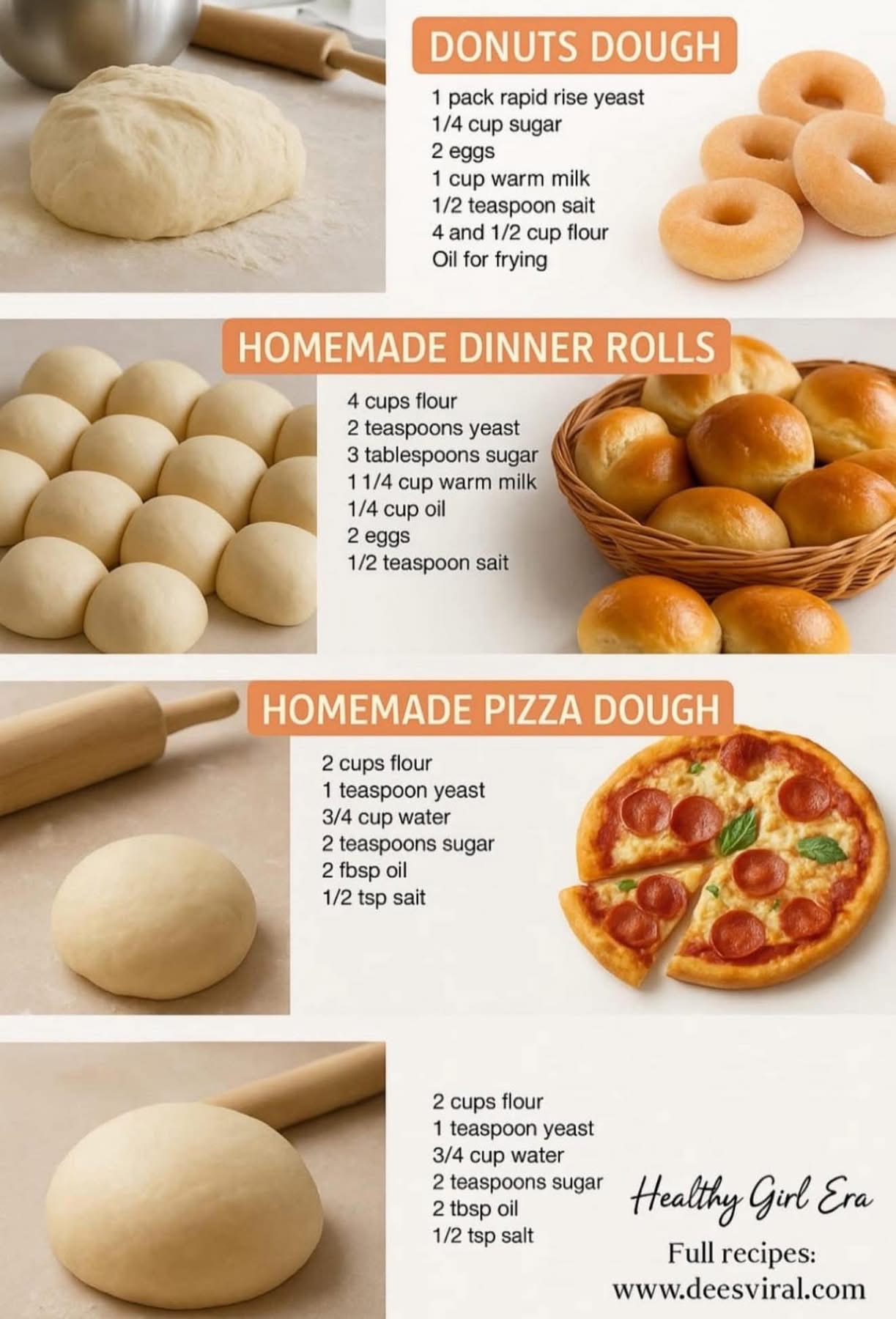
- Dinner Rolls: 4 cups all-purpose flour, 2 teaspoons yeast, 3 tablespoons sugar, 1¼ cups warm milk, ¼ cup oil, 2 eggs, ½ teaspoon salt, 1 egg white + 2 tablespoons water, 2 tablespoons melted butter.
- Pizza Dough: 1 teaspoon yeast, 1 teaspoon sugar, ¾ cup warm water, 2 cups all-purpose flour, 2 tablespoons oil, ½ teaspoon salt.
- Donuts Dough: 1 pack rapid-rise yeast, ¼ cup sugar, 2 eggs, 1 cup warm milk or water, ½ teaspoon salt, ½ cup softened butter, 4½ cups flour, oil for frying.
Instructions
- Dinner Rolls:
- Mix yeast, sugar, and warm milk in a large bowl; let sit for 5 minutes until bubbly.
- Stir in oil, salt, and eggs.
- Gradually add flour, 1 cup at a time, and knead for 5–7 minutes until smooth.
- Cover with plastic wrap and let rise for 1 hour or until doubled in size.
- Divide dough into 16–24 pieces, roll into balls, and place in a greased baking pan.
- Let rest for 30 minutes to rise again.
- Preheat oven to 350°F (175°C) and brush dough with egg wash.
- Bake for 20–25 minutes until golden brown, then brush with melted butter.
- Pizza Dough:
- Mix yeast, sugar, and warm water in a small bowl; let sit for 5 minutes until frothy.
- Combine flour and salt in a mixing bowl, then add the yeast mixture and oil.
- Mix until dough forms, then knead on a floured surface for 5–7 minutes until smooth.
- Place in a greased bowl, cover, and let rise until doubled.
- Punch down dough, dividing into 2 portions for thin crust or keeping whole for thick crust.
- Roll out on a floured surface to desired thickness and transfer to a parchment-lined baking sheet.
- Let rest for 15 minutes, preheat oven to 475°F (245°C), add toppings, and bake on the bottom rack for 12–15 minutes.
- Donuts Dough:
- Combine warm milk or water, sugar, and yeast in a large bowl; rest for 5 minutes until foamy.
- Add eggs, butter, salt, and flour, mixing until a soft dough forms, then knead until smooth.
- Cover and let rise for 1 hour until doubled in size.
- Divide dough into 2 parts, roll out on a floured surface to ¼ inch thick, and cut with a donut cutter.
- Heat 3 inches of oil in a deep pan to 350°F (175°C) and fry donuts until golden brown.
- Drain on paper towels or a wire rack, then roll in sugar, glaze, or cinnamon.
Optional Additions
- Dinner Rolls: Garlic powder, grated Parmesan cheese, or fresh rosemary mixed into the dough or sprinkled on top before baking.
- Pizza Dough: Garlic-infused olive oil brushed on the crust edge, dried oregano, or a dusting of semolina flour on the baking sheet for extra crispness.
- Donuts Dough: Ground nutmeg or vanilla extract in the dough, filled centers with jelly or pastry cream, or chocolate ganache glazes.
Tips for Success
- Ensure liquid temperatures stay between 105°F and 110°F to activate yeast effectively without killing it.
- Weigh flour using a kitchen scale or fluff and spoon it into measuring cups to prevent dense, heavy dough.
- Maintain consistent ambient room temperature during the rise phases to ensure reliable fermentation.
Nutritional Information
- Dinner Rolls (per roll, based on 16 servings): Approximately 140 calories, 4g fat, 22g carbohydrates, 3g protein.
- Pizza Dough (per crust portion): Approximately 320 calories, 8g fat, 54g carbohydrates, 8g protein.
- Donuts Dough (per fried donut): Approximately 220 calories, 10g fat, 28g carbohydrates, 4g protein.
Embracing Healthful Indulgence
Baking and frying at home allow complete control over ingredient quality, omitting artificial preservatives and stabilizers found in commercial alternatives. Enjoying these rich preparations as part of a balanced lifestyle highlights the joy of mindful consumption, honoring traditional recipes made from scratch with wholesome, real-food ingredients.
Recommendation
Pair the freshly baked dinner rolls with savory soups or morning coffee, bake the pizza dough on a preheated pizza stone for optimal pizzeria-style crust blistering, and serve the donuts immediately while warm for the ultimate texture contrast.
Conclusion
Mastering these three foundational yeast doughs unlocks endless possibilities in home baking, bridging the gap between comforting everyday bread, vibrant weekend pizza nights, and indulgent sweet treats.