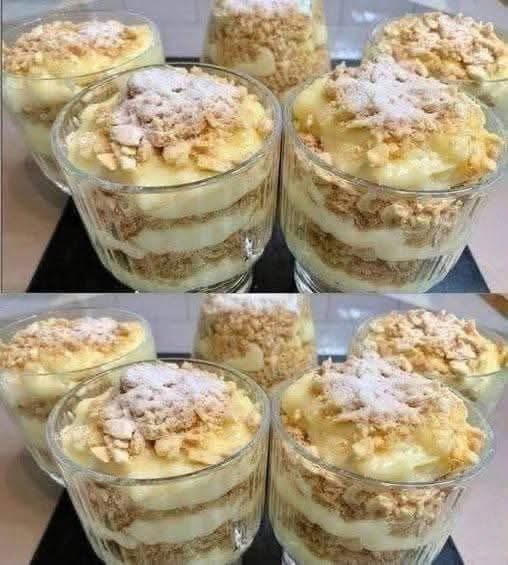
The “Napoleon in a Glass” is a brilliant shortcut dessert that deconstructs the legendary, multi-layered Eastern European classic into an effortless, single-serving masterpiece. It features alternating layers of crisp, golden-baked puff pastry crumbs and a rich, velvety homemade vanilla pastry cream. Served in transparent glasses or cups, this individual dessert showcases clean, elegant lines where the crispy texture of the pastry contrasts against a smooth, melt-in-your-mouth custard. It provides the exact nostalgic flavor profile of a traditional celebration cake, but with a fraction of the effort, making it the ultimate quick fix when a sweet craving strikes.
Introduction
When laziness meets a strong craving for something gourmet, the kitchen usually suffers. However, this “Napoleon in a Glass” recipe changes the narrative entirely. Instead of spending hours rolling out dozens of thin, delicate pastry layers for a traditional cake, this method fast-tracks the process. You simply bake a sheet of store-bought puff pastry, whip up a quick stovetop custard, and layer everything together. Eaten in mere minutes, this dessert feels like an absolute luxury while requiring minimal effort and time.
Origin
The traditional Napoleon cake (closely related to the French mille-feuille) dates back centuries, famously named after the retreat of Napoleon’s army from Russia, where the triangular shape of the cake supposedly symbolized his bicorn hat. Historically, making it was a grueling test of patience, requiring hours of laminating and baking numerous paper-thin dough sheets. Over time, home cooks seeking convenience transformed the concept into “lazy” versions. The “in a glass” variation modernizes the dish further, turning a stressful, multi-tiered baking project into an accessible, individual deconstructed treat.
Cultural Significance
In many Eastern European and Slavic households, Napoleon cake is the undisputed king of celebratory baking, reserved for birthdays, New Year’s Eve, and major family milestones. It represents comfort, maternal love, and the reward of patience. The glass version retains this deep cultural nostalgia while adapting to modern lifestyles. It brings people together around a casual weeknight table or a relaxed weekend gathering, proving that cherished culinary traditions can evolve to fit faster-paced, contemporary lives without losing their soul.
Ingredients Quantity
Puff Pastry: 1 sheet (approx. 8 oz or 225 g), store-bought, thawed
Whole Milk: 2 cups (500 ml)
Egg Yolks: 3 large (room temperature)
Sugar: ⅓ cup (80 g)
Cornstarch: ⅓ cup (40 g)
Vanilla Extract: 1 to 2 teaspoons
Salt: A tiny pinch
Unsalted Butter: ⅓ stick (40 g), cold and cubed
Powdered Sugar: 1 tablespoon (for final dusting)
Optional Additions
Fruit Compote Layer: A thin smear of tart berry jam, such as blackcurrant, raspberry, or cherry, sandwiched between the cream to cut through the sweetness.
Nutty Crunch: Finely chopped toasted walnuts or hazelnuts sprinkled alongside the pastry crumbs for extra depth.
Spiced Warmth: A pinch of cinnamon or cardamom whisked into the flour-sugar mixture for an aromatic profile.
White Chocolate Twist: Folding a tablespoon of melted white chocolate into the finished custard for a richer, creamier profile.
Tips for Success
Cold Butter Secret: Always whisk the cold, cubed butter into the hot custard immediately after removing it from the heat source. This emulsion technique yields a glossy, silky cream without needing heavy fats.
Prevent Skin Formation: When chilling the custard, press plastic wrap directly onto the surface of the cream to prevent a hard skin from forming.
Bake Until Deep Golden: Ensure your puff pastry is baked until a deep, rich golden brown. Underbaked pastry tastes raw and lacks the necessary structural crunch.
Control Texture Timing: Assemble the dessert a few hours ahead if you prefer a soft, cake-like texture where the cream melts the pastry. Assemble just before eating if you prefer an intense, crispy crunch.
Instructions
1. Bake the Pastry: Preheat your oven to 375°F (190°C). Roll out the thawed puff pastry sheet onto a parchment-lined baking tray and poke it gently all over with a fork to prevent bubbling. Bake for 12 to 15 minutes until it is puffed, crisp, and deeply golden. Remove from the oven and let it cool completely.
2. Prepare the Custard Base: In a heavy-bottomed saucepan, whisk together the egg yolks, sugar, cornstarch, salt, and vanilla extract until smooth and pale.
3. Heat the Milk: In a separate container, or gently in a microwave, warm the whole milk until it is hot but not boiling.
4. Temper the Eggs: Slowly pour a small stream of the hot milk into the egg yolk mixture while whisking constantly to prevent the eggs from scrambling.
5. Thicken the Cream: Pour the entire mixture back into the saucepan over medium-low heat. Stir continuously with a spatula or whisk, making sure to scrape the bottom so it doesn’t scorch. Cook until the mixture thickens into a rich, smooth pudding consistency.
6. Emulsify and Cool: Remove the saucepan from the heat immediately and stir in the cold, cubed butter until completely melted and incorporated. Transfer the custard to a clean bowl, cover the surface tightly with plastic wrap, and chill in the refrigerator for at least 1 hour.
7. Crush the Pastry: Break the cooled puff pastry sheet apart with your hands. Crush most of it into bite-sized flaky pieces, and reserve a small portion of finer crumbs for the final topping.
8. Assemble the Glasses: Take your transparent serving glasses. Add a layer of crushed puff pastry at the bottom, followed by a generous layer of chilled vanilla custard. Repeat the layers until you reach the top of the glass, finishing with a final layer of custard.
9. Garnish and Serve: Top the glasses with the reserved fine pastry crumbs and dust lightly with powdered sugar. Serve immediately for ultimate crunch or chill for a softer texture.
Nutritional Information
Calories: Approximately 310 kcal per serving
Macronutrients: 14g Fat, 40g Carbohydrates, 6g Protein
Dietary Notes: Vegetarian-friendly, easily scalable for larger crowds.
Conclusion
The “Napoleon in a Glass” proves that sophisticated desserts do not require professional pastry skills or endless hours in the kitchen. By stripping away the intimidating components of the classic recipe while keeping its iconic flavor profile intact, this lazy approach delivers pure satisfaction. It is quick, visually stunning, and remarkably delicious, making it a reliable favorite for any sweet tooth pressed for time.
Recommendation
For an optimal tasting experience, pair this dessert with a glass of ice-cold milk or a hot, robust espresso. The bitterness of pure coffee cuts through the rich sweetness of the custard, elevating the flavor profile of the pastry.
Embracing Healthful Indulgence
While this dessert is an unapologetic treat, practicing healthful indulgence means enjoying it mindfully as an occasional weekend reward. You can balance the richness by pairing it with a side of fresh, antioxidant-rich berries or scaling down the sugar portion in the custard without sacrificing the core texture and comforting spirit of the dish.