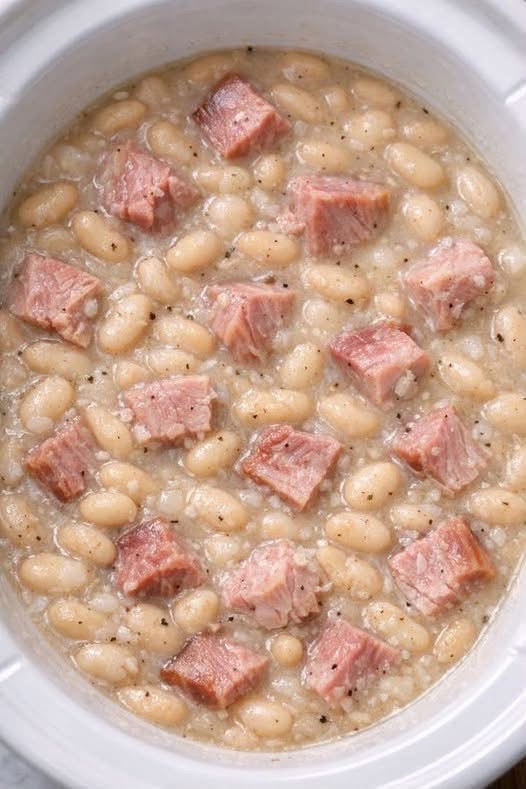
There is nothing quite like a steaming bowl of Creamy White Beans and Ham to bring warmth and comfort to the kitchen. This classic, rustic dish transforms simple, humble pantry staples into a rich, velvety meal that feels both indulgent and deeply nourishing.
Description
This dish features tender, slow-simmered white beans bathed in a luxuriously thick broth infused with smoky, savory ham. The natural creaminess of the beans—achieved by gently mashing a portion of them—creates a velvety texture without heavy cream, making every spoonful rich, hearty, and satisfying.
Origin and Cultural Significance
Rooted in traditional peasant cooking, dishes combining beans and leftover holiday ham are staples across European and American southern culinary traditions. Historically, resourceful cooks utilized every part of a cured ham—especially the bone—to flavor large pots of dried beans. It represents the ultimate expression of thriftiness and hospitality, providing a filling, budget-friendly feast for large families during the colder months.
Ingredients & Quantities
- Dried Great Northern or Cannellini Beans: 1 lb (rinsed and soaked overnight)
- Smoked Ham (with bone, or thick-cut ham chunks): 1.5 to 2 lbs
- Olive Oil: 2 tablespoons
- Yellow Onion: 1 large (diced)
- Carrots: 3 medium (sliced)
- Celery Stalks: 3 (diced)
- Garlic: 4 cloves (minced)
- Low-Sodium Chicken Broth: 6 cups
- Water: 2 cups (plus more as needed)
- Fresh Thyme: 4 sprigs
- Bay Leaves: 2
- Salt and Black Pepper: To taste
Optional Additions
- Dark Leafy Greens: 2 cups of chopped kale or Swiss chard stirred in at the end.
- Acid Kick: A splash of apple cider vinegar or lemon juice just before serving to brighten the richness.
- Cheese Rind: Toss a Parmesan cheese rind into the pot while simmering for extra umami depth.
Tips for Success
- Soak Your Beans: Overnight soaking ensures even cooking and easier digestion, though a quick-soak method works in a pinch.
- Hold the Salt: Ham is naturally salty, so wait until the beans are completely tender before adjusting the final seasoning.
- Create Creaminess: Use the back of a wooden spoon to mash about one cup of the cooked beans against the side of the pot to thicken the broth naturally.
Instructions
- Sauté Aromatics: Heat olive oil in a large Dutch oven over medium heat. Add the onion, carrots, and celery, cooking until softened (about 6 minutes). Add the garlic and cook for 1 minute until fragrant.
- Build the Base: Add the drained beans, ham bone or chunks, chicken broth, water, thyme sprigs, and bay leaves. Bring the mixture to a boil.
- Simmer: Reduce the heat to low, cover, and let it simmer gently for 1.5 to 2 hours, stirring occasionally, until the beans are completely tender.
- Shred and Thicken: Remove the ham bone, shred any meat off the bone, and return the meat to the pot. Mash a portion of the beans to achieve your desired creamy consistency.
- Season and Serve: Discard the bay leaves and thyme stems. Taste, season with black pepper and salt if needed, and serve hot.
Nutritional Information (Per Serving)
- Calories: ~380 kcal
- Protein: 24g
- Carbohydrates: 45g
- Dietary Fiber: 12g
- Fat: 11g
- Sodium: 680mg
Embracing Healthful Indulgence
While this dish tastes decadent, it is surprisingly wholesome. Beans are a nutritional powerhouse packed with plant-based protein, complex carbohydrates, and gut-healthy fiber. By relying on slow-simmered starches rather than heavy dairy for its creamy texture, this comfort food allows you to indulge guilt-free while fueling your body with vital nutrients.
Conclusion
Creamy White Beans and Ham is more than just a recipe; it is a celebration of simple ingredients coming together through patience and heat. Whether you are seeking refuge from a chilly evening or looking for an easy, crowd-pleasing weekend meal, this dish delivers unmatched comfort in every bite.
Recommendation
Pair this hearty dish with a thick slice of crusty artisan sourdough bread or warm cornbread to soak up the flavorful broth. A simple side salad dressed in a sharp vinaigrette will help balance the richness of the ham and beans.
What is your favorite type of bean to use when making comforting winter soups and stews?